
FIRE WARNING
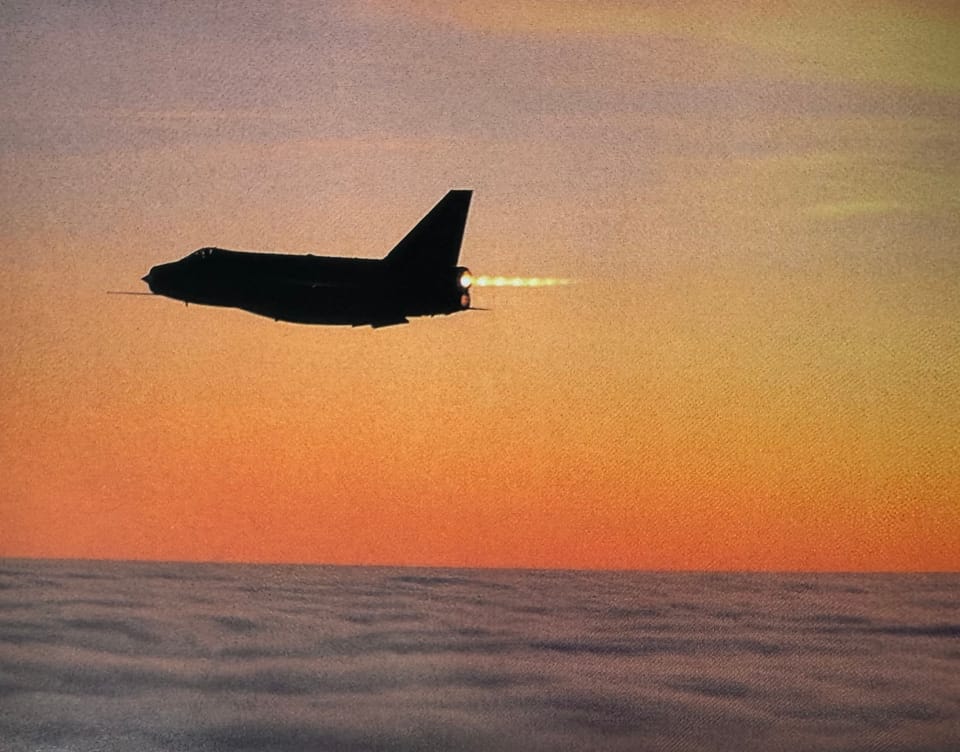
FIRE WARNING
Tales from the Cockpit - Written By Ian Black
It was my third Lightning solo and there is a very apt phrase for my ability at the time, “behind the drag curve.” I’d gone solo previously, but I was very aware that I was at the limit of my abilities. The Lightning definitely had the upper hand, and I was using every fibre in my body to try not to let it beat me.
The pace of learning on a Lightning training flight was as steep as its reputed vertical climb rate. There was no time to go back over exercises you’d previously done. You either got it or you were chopped, or, in official speak, “you had failed to meet the required standard.”
On the day in question, 21st OCT 1986, I had previously flown dual with Flt Lt John Fynes in a T Mk5 to investigate some of the unique handling qualities of a high-performance swept-wing fighter. The technical term for what I was about to do was Max Rate Turns (MRTs). In a normal aircraft, a pilot can find a sweet spot. For example, it might be 1,000 feet where you can apply full power, pull the stick back and hold, say, 4G at 300 knots until you run out of fuel. That might work at 1,000 feet, but if you do the same manoeuvre at, say, 20,000 feet, you won’t have enough thrust. As you reach 4G, the speed will decay and you will either have to relax the back pressure, and therefore G, or descend.
As a student, you were shown that you could sit at 1,000 feet, maintain 360 to 400 knots, select full reheat and then pull to 6G and watch the speed increase. You had to be extremely careful, as the stick forces became quite light and it was very easy to over-G the aircraft, which was limited to +6G. In truth, you could pull 6.9G before a 7G over-stress registered.
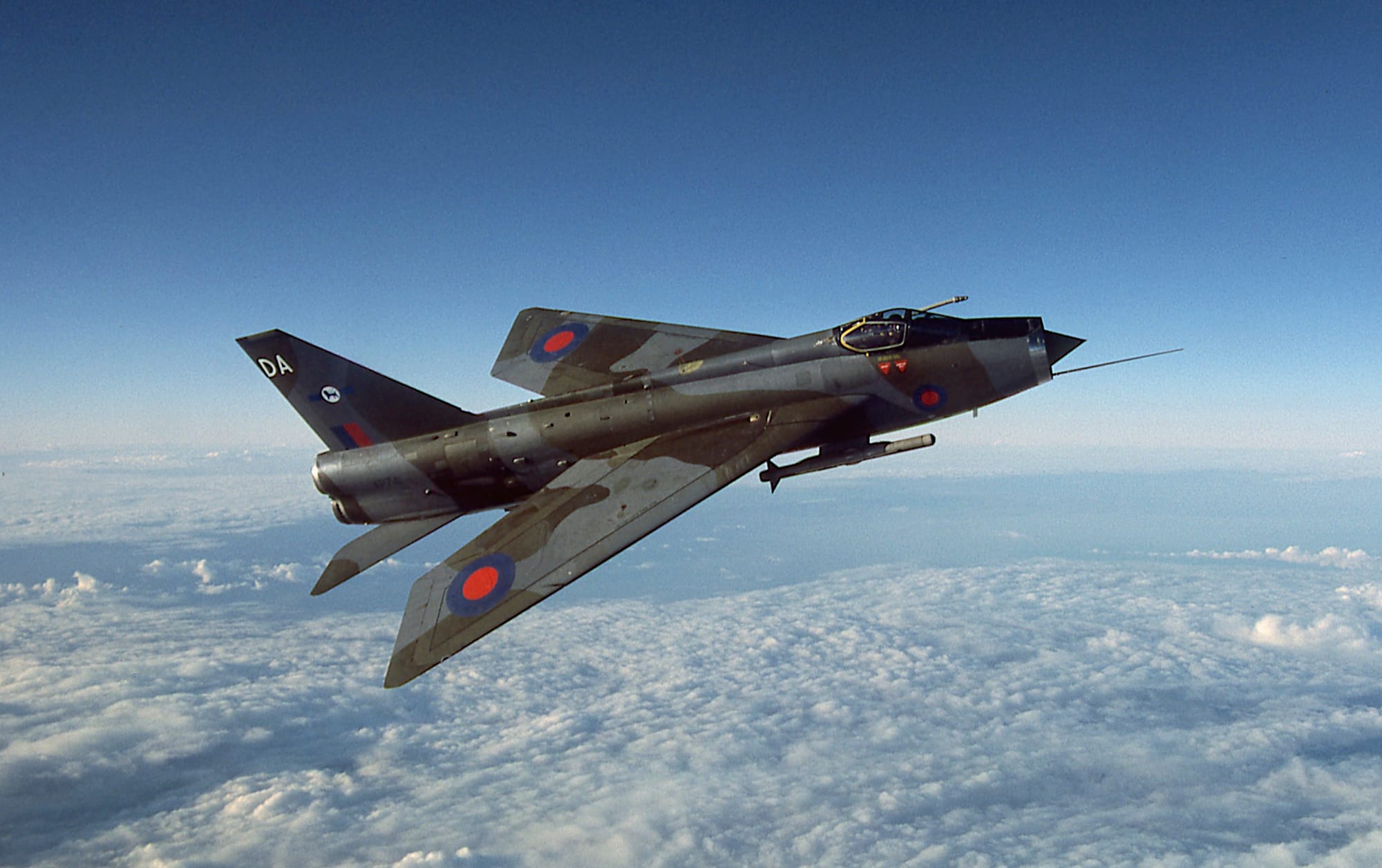
That brought an extra problem, overstressing a Lightning. It was a big no-no, and an expensive one. Pulling over 6G put huge strain on the airframe and, to ensure some of the critical fuel and hydraulic pipes running through the fuselage hadn’t been stretched and possibly caused a leak, both engines had to be removed. Here comes the expensive part. The engineers and ground crew would be working overtime to remove both engines and check for leaks, and the cost to you, as a ham-fisted pilot, was normally several crates of beer to wash down a large serving of dry humble pie.
Now armed with all the facts, it was time to fly the sortie. As a student, you were briefed by a grown-up who resembled a Rottweiler, a very weathered, gnarly Lightning pilot with more patches on his arm than a seasoned Girl Guide. He went through what he wanted you to do, with lots of questions and, hopefully, correct answers, quizzing you on all the emergencies that might happen and what you planned to do when the warning panel lit up.
 Callsign Collective
Want to know your options? We've got you covered!