
PART II - KNIFE FIGHT IN A PHONE BOX
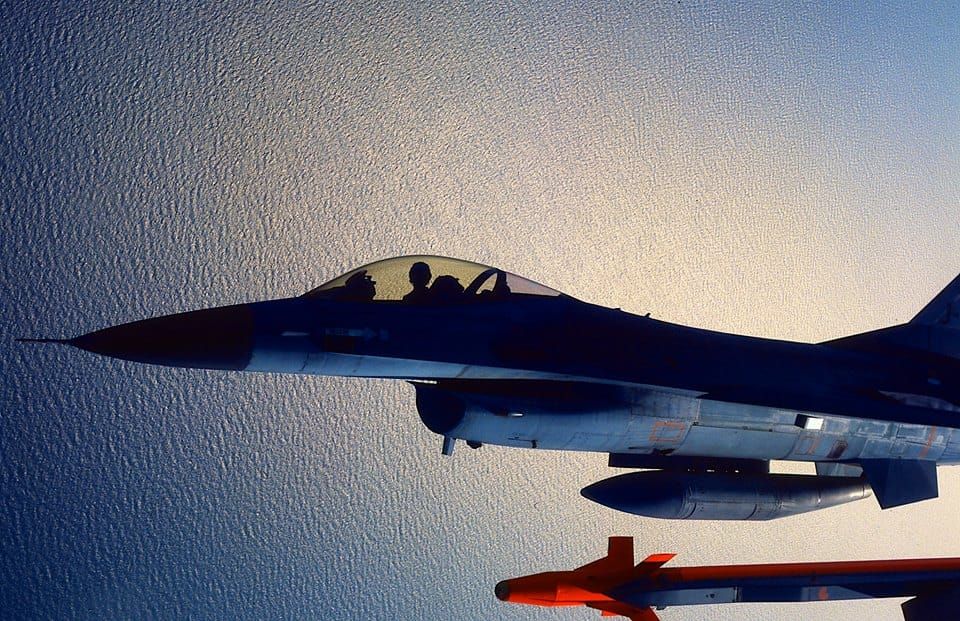
Fighting Falcon style
So let's think about fighting an F-16 or F-4 as for real in war we are not going to fight a Lightning, but a soviet fighter like a Mig 29 or Mig 23 similar to both the F-16 and F-4.
The F-4 had many guises The English version F-4K/M or American version F-4E or other export versions- like the German F-4F.
In Fighter aircraft they have built in weapons systems, so first let's look at the radar - UK Phantoms had the AWG 11-12 -Pulse Doppler radar which is way more powerful and capable than the Lightnings Ferranti AI23.
So we can store away the fact that the F-4 would see us first on his radar.
Perhaps a plus or perhaps a minus depending which side you dress but the Phantom is 2 crew - That means the guy in the front has a guy in the back to do all his little jobs - how cute. 🤗
It also means they have 2 pairs of eyes or 4 eyeballs - so in a big fight - multi bogey you can divide your attention on the good guys and bad guys - single seat, to coin a phrase you are on your Todd one pair of eyes, one set of hands but obviously a massive brain...

The Phantom is bristling with weapons radar guided missiles, heat seeking missiles, guns and infra red decoys, and perhaps chaff an anti radar device.
In our steam driven Lightning we have two pretty basic missiles 2 x 30mm cannons and zero self defence capability or do we...
Being cunning and sly old chaps we did have one little ace up our sleeves DIY Chaff - which if you are over 100 years old was known as “window” and is an anti radar device - Thin strips of aluminium that are ejected into the air and used to fool enemy radars.
These metal strips were placed in small brown paper bags and lightly sealed allowing them to break open once ejected and swamp enemy radars.
Most modern fighters have small dispensers or carry pods that Chaff can be dispensed from.
The Lightning had none of this high tech stuff so we had to be a bit sneaky.
The airbrakes on the Lightning are mounted at the rear of the fuselage and operated by a switch on the throttles by the pilot.
After engine start ground crew would signal for the airbrakes to be opened and then bravely clamber up the fuselage and stuff bundles of chaff into the airbrakes which we would then lock shut making sure we didn’t squish their grubby little fingers inside.
If we flew as a 4 ship formation we thus had 4 lots of chaff we could dispense to fool our enemy radars .
Of course a simple plan often led to simple mistakes.
On more than one occasion pilots would return to Binbrook not having used the Chaff in combat once in the overhead, select airbrakes out and cover the airfield in tin foil - very bad for the environment but even worse for the bases air traffic radar which we had now put out of action for ten minutes as little strips of tin foil floated slowly down to earth.
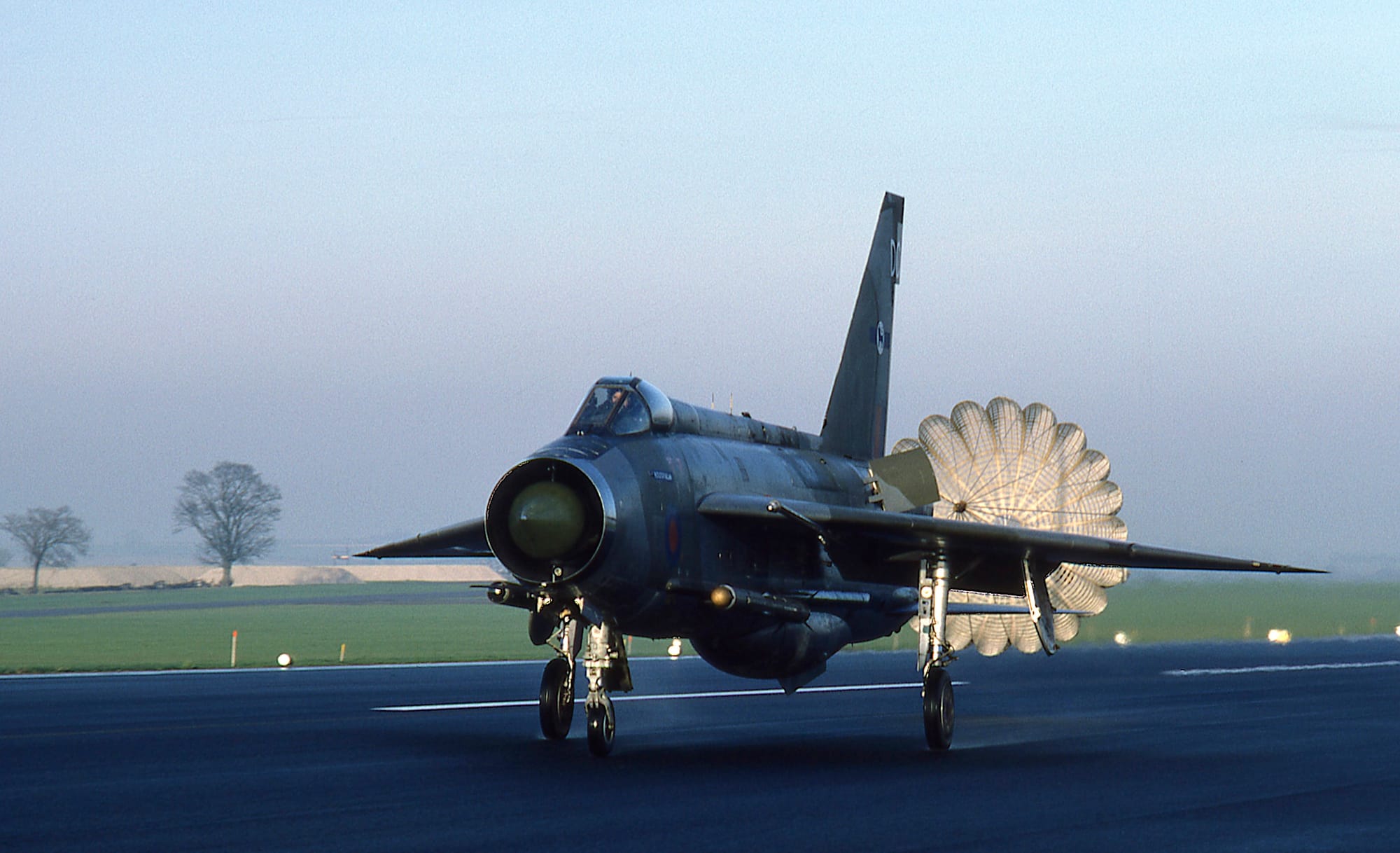
Back to knowing your enemy...
The F-4K/M Phantom was operated by the RAF so we knew all we needed to know - basically, at range they’d probably kill us with their radar missiles but close in we had the upper hand.
Our turn performance was much better but we didn't have as much fuel so we needed to be sure that we could exit the fight with the upper hand - running away short of gas is not a great place to be tactically.
The advantage of doing air combat against a target you are unfamiliar with is the surprise factor - rabbit in the head lights syndrome.
Lets look at how the USAF developed air combat tactics with lessons learned from the Vietnam war.
In training you pretty much know that on a 45 minute sortie you might get three individual set ups so you have a few game plans stashed away in your G suit pocket.
In war that first pass its crucial you know what your actions are and so the Red Eagles were born.
At a secret location in the Nevada desert the USAF formed a top secret Squadron flown by American pilots but flying Russian Migs - The story is well known and there are a few excellent books on the subject. (plug for Steve Davies Red Eagles and Rob Zettle’s Mig Squadron)
But the primary aim of the programme known as “ Constant Peg” was to give rookie pilots the experience of meeting a Mig in the sky in a peacetime environment over home territory - No more rabbits in headlights.
In the RAF we didn’t have the luxury of fighting Migs (until the East German Air Force obliged in the late 1980’s) But what we did have was the 525th Aggressor Squadron based at RAF Alconbury a USAFE (Europe base)
These guys flew the diminutive F-5 Freedom fighters and they replicated Soviet fighters - These pilots were good - very good, Top Gun pilots on steroids.
Once in a while we would either deploy to RAF Alconbury or they would come to us - Have Migs, will travel.
Rewind a few decades and 1988 was still Cold War city - we had one enemy and one enemy only the Russians or the Warsaw Pact. We didn’t consider the middle East or China as a threat it was the Bear with the big red star.
RAF squadrons had huge heavy metal safes that contained thick red books on Soviet warplanes, missiles and tactics, all marked NATO SECRET.
What none of us knew at the time was the Americans were flying a whole squadron of Migs in secret - they guarded their secret better than the contents of a Nuns bedside drawer.

On my first detachment to Alconbury I sat in a briefing that was more secret than where my wife keeps her diary - Doors with “BRIEFING IN PROGRESS TOP SECRET" were illuminated with neon signs.
I sat perplexed as our American aggressor pilots told us about the Mig 21 - 23 and what they could do. They knew everything, turn rates, fuel burns, weapons envelopes christ even how many landings they got from one set of tyres.
My inquisitive brain worked overtime as i tried to work out how they knew so much.
But this Aggressor pilot knew so much more about Migs… I was intrigued.
I didn't push my boyish inquisitiveness but I knew there was a lot more than they were not telling us - Did they have an exchange programme with the Russians ?
My mind raced..