
P1B February Newsletter
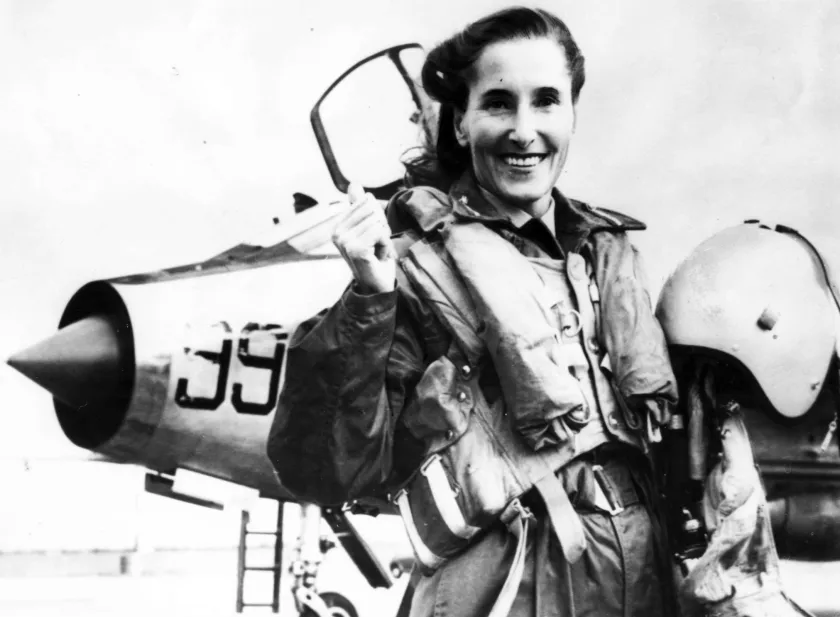
The Other Lady Diana
I’m pretty sure Lightning pilots never wore Chanel No. 5, but here we are at Newsletter Number 5! A bumper issue with no free plastic toys. Sorry!
Thank yous go to two of aviation’s greats. First off, Simon Watson, who runs the Aviation Bookshop in Tunbridge Wells.

Next month we will be holding a very special auction for the P1B prototype notes, kindly supplied by Simon. A true one-off for enthusiasts: an original copy of the P1B pilot’s notes.
These are incredibly rare and a real gem. Produced in an era before computers, the manuals offer a rare glimpse into how to operate the Lightning, as well as some very detailed descriptions of how it was manufactured. Marked SECRET, they were later downgraded to RESTRICTED, but they remain a true Holy Grail for collectors.
Our second thank you goes to Erwin Stan, who runs:

A real mecca for aviation enthusiasts, Erwin placed a large order for Lightning Volume 4 – A Tribute to the P1B, and naturally, with the help of EasyJet, the books were delivered by hand - any excuse to visit Amsterdam!
With 45kg of hand luggage, a clandestine meeting was held at Schiphol - just enough time for a smoke and a pancake.
Restoration Update
On the restoration side, our aim is to replicate one day in history: Thursday 23 October 1958 - the day the P1B was christened 'Lightning'.
Currently, the major airframe difference from that day is the tail fin, so let’s have a recap - no pun on “all fins” Lightning (said in a mild Cockney accent).
First off, the P1A had a small fin, as it was never planned to fly beyond Mach 1.3. The P1B started life with a requirement to fly at Mach 1.6 - still a quantum leap from the Mach 1.0 (just) Hunter.
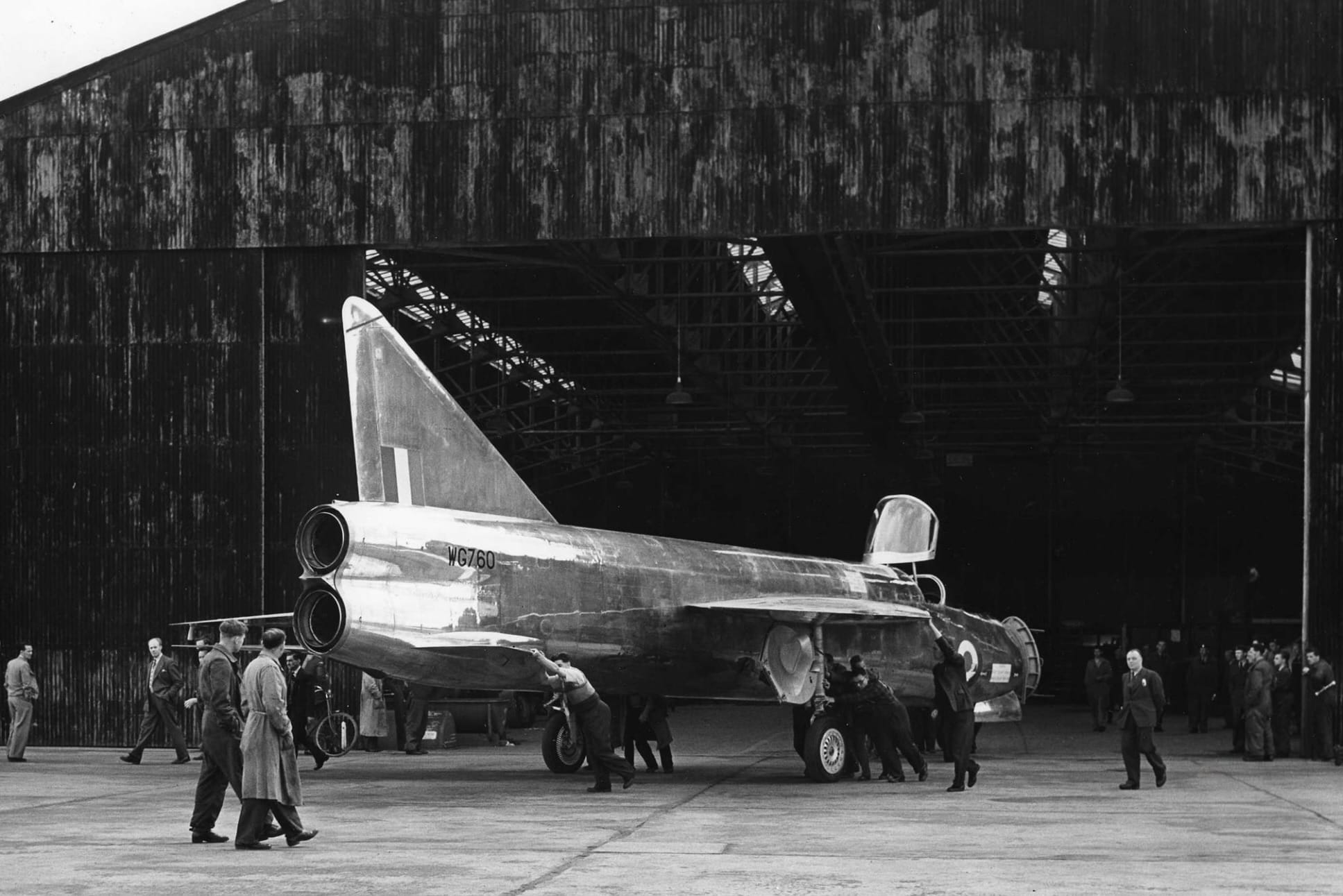
Early on, Bee Beaumont knew it would easily exceed Mach 1.6, but directional stability would require an increased fin size. The new fin - often referred to as the “witches hat” style, was fitted to the Mk1/2 and T Mk4 Lightnings.
Later Lightnings had the square-top fin with increased area (and greater top speed), but all fins suffered from a lack of strength, and quite often the rudder would come off.
A little-known fact…
The Lightning was an incredibly powerful aircraft. It had two huge Rolls-Royce Avon engines to propel it to Mach 2 - in fact, some pilots reported a top speed of Mach 2.1. But one thing it didn’t possess was a very efficient way of slowing down.
Many fighter aircraft have air brakes mounted on the wing - F-4 Phantom, Mirage 2000, for example. This adds drag and kills lift.
The early P1A Lightning had no airbrakes. They were earmarked for the rear of the fuselage, like clamshell doors, but never seem to have been fitted. Perhaps, as the P1A was never designed to fly in close formation, they were deemed a luxury?
I find it a mystery, as flicking the airbrakes - whilst sounding cool and sexy - was also an essential part of dogfighting.
To rectify this, the P1B had a pair of small airbrakes placed at the base of the forward fin on the upper fuselage. Trials were conducted adding holes into the airbrakes. They were always speed-limited (you couldn’t deploy them at high Mach numbers), but due to their small size they were pretty ineffective.
So pilots devised new ways of killing themselves (see our last 2 publications) and decided extra methods of braking were needed.