
P1B September Newsletter
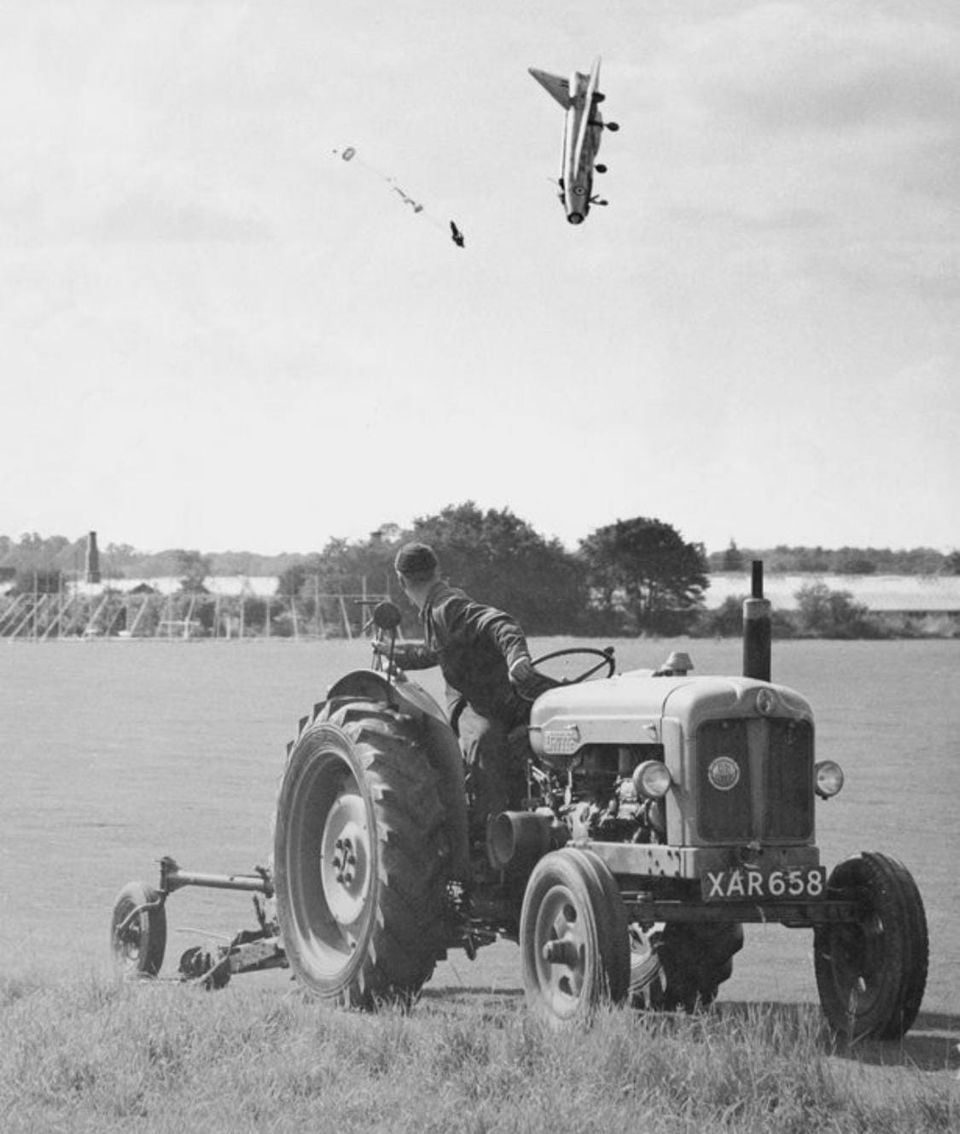
It’s the one you’ve all been waiting for… well, it would have been if we had been going to Goodwood.

As we explained, the undercarriage issue has meant we have had to postpone for another year. We hope.
The damage caused when the aircraft was taken apart in the late ’90s is too much for a quick fix. My suggestion of putting her on pallets didn’t go down well, and so we have taken a well-earned break whilst we come up with a fix.
Clearly, with a priceless artefact, it’s not a question of a bodge job. It has to be a certified repair, and there are only a handful, or even a hand with three fingers, of people who might be able to do the task.
We will be back… as the Governor of California once said.

What have the Callsign Collective team been up to? What haven’t we been up to?
Highlight of the month was perhaps our appearance at the 2 Excel Charity Ball thanks to Eddie & Emma from Aerobytes. We invited along our trainee intern, Miss Bethany Mullett, who won the prize to sit next to me after her outstanding support at the Aces High Gallery.
A pleasure to sit next to someone so bright and brainy. I felt a bit inadequate by 0300, having discussed the likes of her love of Jackson Pollock, the artist. Then we moved onto religion and how, for £8,000, she would convert to Christianity in a most unusual way, rounded off with some very interesting conversations on how to save money on your energy bills…
But apparently it’s a good read.
From Dolly Parton to the P1B
It’s been quite a month in our celebrity world. Dolly Parton has left the building and Celine Dion has made a surprise comeback.
Despite suffering from stiff person syndrome, something I confess I now realise I’ve had since being a teenage boy (and it’s incurable), she put on an amazing show.
So how can we follow that?
Imagine stepping into Dr Who’s TARDIS and pressing a button to 195… something or other. One of those great British phrases that covers a multitude of answers, a bit like thingamajig.
You are a pilot and you want to fly a Lightning, so let’s look at what was on offer to you.
We know that there were no simulators and there were no two-seat training versions. That first flew in 1959, so it’s time to put your big girl pants on and man up.
Actually, in this modern world, it might be time to put your little girl knickers on and girl up, but that puts an image in my head of what it must have been like to fly a Jaguar. I know that for a fact, as my good friend Ian Smith (Jaguar pilot) told me.
So, now that we have rummaged through the underwear drawer, it’s time to get serious.
English Electric were pretty generous about who they let fly the Lightning. We know from photographs and documents that the USAF sent a team, including Bud Anderson (top WW2 ace), to try out the P1B, as well as Deke Slayton, a future astronaut.
Now, whilst the great US-American friendship was on paper a marriage made in heaven, it was in truth a bit of a one-way affair. Us Brits like to give away stuff and the Yanks like to receive stuff, so it was probably a good way for our American allies to get up close and personal with English Electric’s finest.
The trust was immense, a bit like letting your wife go for a romantic dinner date with David Gandy, hoping that he doesn’t touch things he shouldn’t and returns her in one piece.
To be fair, the US allowed our pilots to handle their latest jets, including the U2 (but not the SR-71), and so it was a bit of a wife swap made in heaven.
Back to David Gandy, who I have noticed has started dyeing what little hair he has left and that his double chin could do with a little nip and tuck, but I digress.
How did the foreign test pilots get to grips with the P1B?
I forgot to add that we also allowed the Germans to fly the Lightning.
I mean, really!
This was 1958 and 13 years prior we had been arch-enemies.
So the question was: how?
To fly a jet fighter, I was once told, you need to be James Bond but at the next level. I don’t recall who told me that, but I’m pretty sure it was a guy in a G-suit.
Being of foreign extraction, the first hurdle that our guest pilots needed to master was the good old British weather.
Of course, now, thanks to climate change, the UK basks in a near-tropical heatwave 362 days a year, but in the 1950s we had snow and fog. Often dense fog and periods of two or three weeks where fighter bases didn’t turn a wheel due to poor visibility.
Most of the “guest” pilots got checked out on some of the more dangerous types, like the Gloster Meteor and the Javelin, or the docile Hunter, before being unleashed on the Lightning.
This gave British instructors a chance to “suss” out the new boys and give them the thumbs up or down on whether they were going to progress to faster things.
In the dashing, swashbuckling era of the 1950s, life was pretty cheap and accidents were a daily occurrence. It was a risk, and a risk pilots thought worth taking to fly beyond the speed of sound.
Generally, though, jets had similar handling and all that was needed were a few well-chosen words on the “gotchas”.
In the case of the Lightning, two minutes would be enough to tell you that during the take-off the acceleration was going to take your breath away. Then watch the fuel gauges like a boy in a peep show and think very carefully about how to get the thing back on the ground.
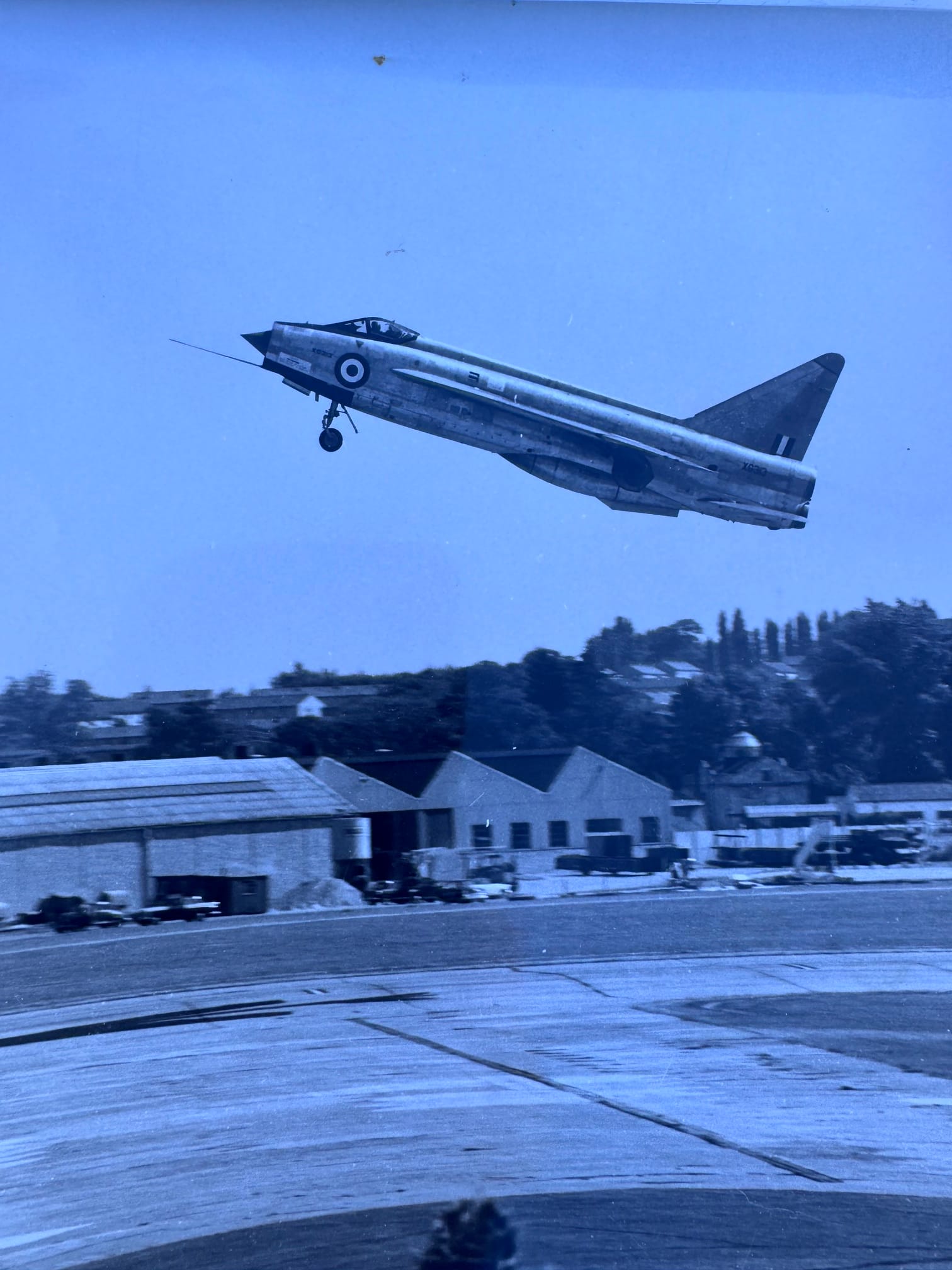
Oh, and a little chat about highly swept wings, turn performance and form-induced drag.
So, having had the oral, no tittering, let’s take a closer look at the Bible.
And by Bible, I mean the Pilot’s Notes, which for me personally are more enticing than a pile of 1970s Penthouse magazines.